Pollo Relleno Guatemalteco: The Definitive Guide to Guatemala’s Christmas Stuffed Chicken
Discover Authentic Pollo Relleno Guatemalteco
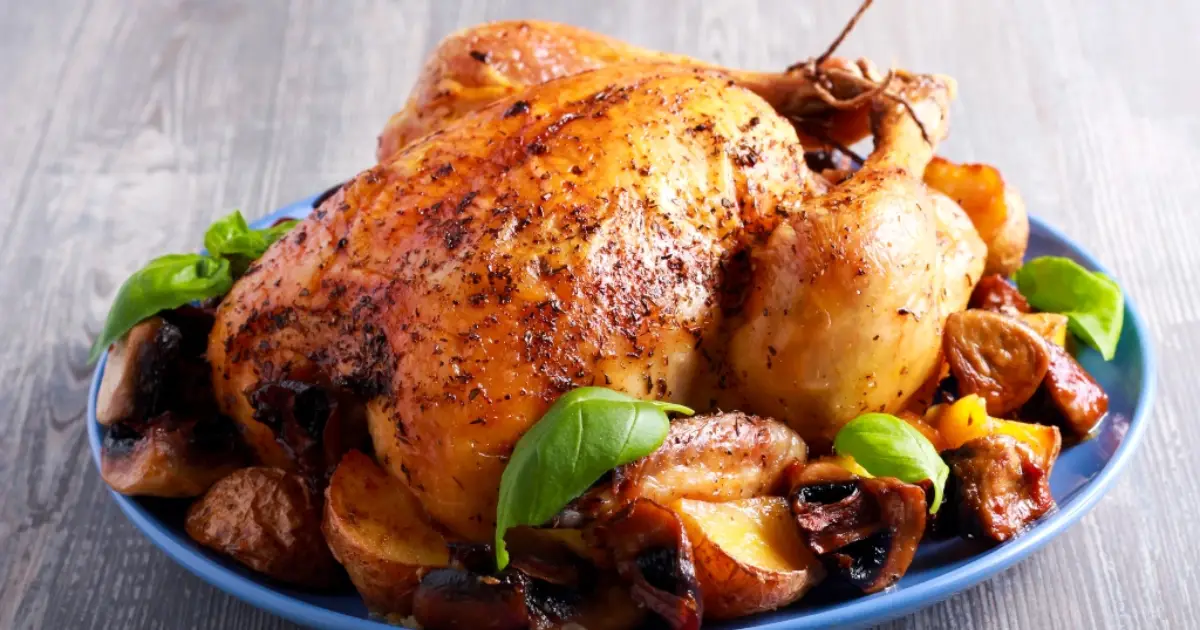
In the highlands of Guatemala, where volcanic peaks frame colonial cities and ancient Mayan traditions blend seamlessly with Spanish culinary heritage, one dish rises above all others during the Christmas season: Pollo Relleno Guatemalteco. This magnificent stuffed chicken represents far more than a holiday centerpiece—it embodies centuries of cultural exchange, family tradition, and the distinctly Chapín (Guatemalan) approach to celebration through food.
Unlike its distant cousins in European cuisine, Guatemalan stuffed chicken tells a uniquely Central American story. The marriage of Old World techniques—wine reductions, herb-butter basting, and careful trussing—with indigenous flavors and festive dried fruits creates something that could only have emerged from Guatemala’s particular colonial history. Every family guards their version jealously, yet the essential character remains unmistakable: savory ground meat mingling with sweet prunes and raisins, perfumed with red wine, all encased in golden, herb-lacquered poultry.
Ingredients: A Detailed Breakdown
For the Stuffing (Relleno)
| Ingredient | Quantity | Purpose |
|---|---|---|
| Ground beef | 1 kilogram (2.2 lbs) | Provides the savory protein base |
| Yellow onion | 1 large, chopped | Aromatic foundation |
| Garlic | To taste, minced | Depth and pungency |
| Bell pepper (chile pimiento) | 1 medium, chopped | Sweetness and color |
| Prunes (ciruelas secas) | ½ cup, chopped | Jammy sweetness, moisture |
| Raisins | ½ cup | Concentrated grape sweetness |
| Almonds | ⅓ cup, roughly chopped | Textural contrast, nuttiness |
| Red wine | ¾ cup (180 ml) | Acidity, depth, cohesion |
| Olive oil | 3 tablespoons | Cooking medium |
| Salt and black pepper | To taste | Seasoning |
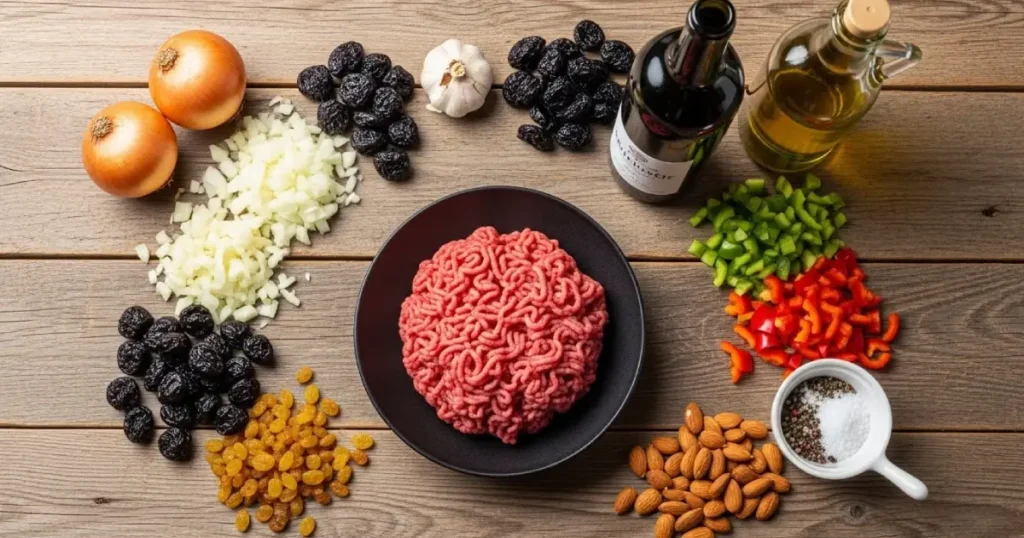
The prunes deserve particular attention. Look for moist, pliable specimens rather than desiccated ones—they should yield easily when squeezed. Dried plums that have hardened will not rehydrate sufficiently during the brief cooking time and will remain unpleasantly chewy in the final dish.
For the almonds, blanched and slivered work well, though whole blanched almonds roughly chopped provide more substantial textural presence. Avoid pre-sliced almonds, which can become mealy when cooked into the mixture.
The wine should be something you would drink, though not necessarily expensive. A medium-bodied Merlot, Tempranillo, or Carménère works beautifully. Avoid heavily oaked wines or anything with aggressive tannins—these can turn bitter when reduced.
For the Chicken and Roasting
| Ingredient | Quantity | Purpose |
|---|---|---|
| Whole chicken | 1 large (4-5 lbs) | The vessel and primary protein |
| Unsalted butter | ¼ cup (60g), softened | Herb carrier, browning agent |
| Chicken broth | 1 liter (4 cups) | Basting liquid, humidity source |
| Fresh thyme | 1 tablespoon, minced | Aromatic complexity |
| Dried oregano | 1 teaspoon | Earthy depth |
| Salt | 1 tablespoon + more to taste | Seasoning throughout |
| Black pepper | 1 teaspoon, freshly ground | Heat and fragrance |
| Kitchen twine | As needed | Trussing |
Choose a chicken between 4 and 5 pounds—large enough to accommodate generous stuffing but not so massive that achieving even cooking becomes difficult. The cavity should be clean and free of excess fat deposits, though a thin layer of fat near the opening helps prevent the stuffing from drying at its edges.
If possible, source a bird that has not been pre-brined or “enhanced” with saline solutions. These treated chickens can become unpleasantly salty when combined with the seasoned stuffing and salted butter rub. A natural, air-chilled chicken offers the cleanest canvas for this preparation.
Step-by-Step Instructions
Phase One: Preparing the Stuffing
Step 1: Build the Aromatic Base
Heat olive oil in a large, heavy-bottomed saucepan over medium heat. Add the chopped onion and sauté for 4-5 minutes until softened and translucent. Add the minced garlic and cook for another 60 seconds until fragrant but not browned. The goal is sweetness through gentle cooking, not caramelization.
Step 2: Brown the Meat
Increase heat to medium-high and add the ground beef, breaking it apart with a wooden spoon. Cook for 8-10 minutes, stirring regularly, until the meat has lost its raw color and developed light browning on some pieces. The fond (browned bits) that develops on the pan bottom will contribute significant flavor.
Step 3: Incorporate Vegetables and Fruits
Add the chopped bell pepper, prunes, and raisins to the meat mixture. Stir thoroughly to distribute evenly. Cook for 3-4 minutes, allowing the fruits to begin softening and releasing their sugars.
Step 4: Deglaze and Reduce
Pour the red wine over the mixture. Using your wooden spoon, scrape any fond from the pan bottom, incorporating these caramelized proteins into the liquid. Allow the wine to simmer and reduce by approximately half—this concentrates flavor and eliminates raw alcohol notes. The mixture should appear moist but not soupy.
Step 5: Finish and Cool
Remove from heat and fold in the chopped almonds. Season with salt and pepper, tasting carefully—the mixture should be well-seasoned but not aggressive. Transfer to a bowl and allow to cool to room temperature. Never stuff a chicken with hot filling, as this creates food safety concerns and can begin cooking the interior of the bird unevenly.
Phase Two: Preparing and Stuffing the Chicken
Step 6: Season the Cavity
Pat the chicken thoroughly dry inside and out using paper towels. Season the interior cavity generously with salt and pepper, ensuring the seasoning reaches into all crevices.
Step 7: Fill the Bird
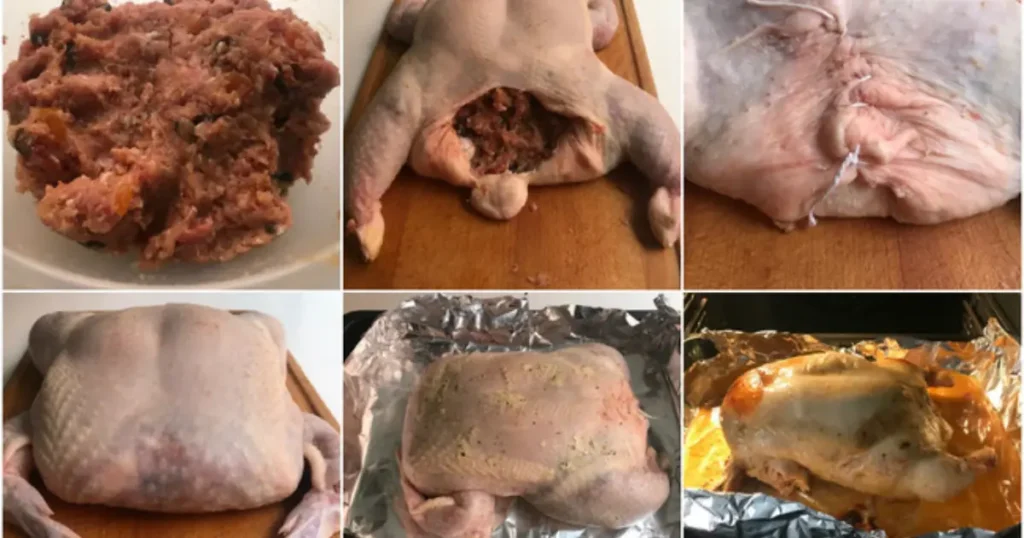
Spoon the cooled stuffing into the chicken cavity, packing it firmly but not excessively tight. The stuffing will expand slightly during cooking; overpacking can cause splitting. Aim to fill the cavity completely while leaving the stuffing slightly loose.
Step 8: Truss Securely
Using kitchen twine, sew the cavity closed with a simple whip stitch, or use skewers combined with twine to secure the opening. Cross the legs and tie them together firmly. Tuck the wing tips under the bird’s back or tie them close to the body. This trussing serves two critical functions: it prevents stuffing from escaping and promotes even cooking by creating a compact shape.
Step 9: Create the Herb Butter
In a small bowl, combine the softened butter with thyme, oregano, salt, and pepper. Mix thoroughly until the herbs are evenly distributed. This compound butter will both flavor and protect the skin during roasting.
Step 10: Apply the Coating
Rub the herb butter evenly over the entire exterior of the chicken, ensuring coverage on the breast, thighs, drumsticks, and back. Pay particular attention to the breast area, which is most prone to drying. Some cooks gently loosen the breast skin and apply butter directly to the meat beneath—a technique that adds moisture insurance.
Phase Three: Roasting
Step 11: Prepare the Roasting Environment
Preheat your oven to 190°C (375°F). Pour the liter of chicken broth into a roasting pan or large oven-safe baking dish. The liquid should form a shallow pool approximately 1 inch deep.
Step 12: Position and Begin Roasting
Place the prepared chicken breast-side up in the roasting pan, nestled in the broth. The liquid should come partway up the sides of the bird but not submerge it. Transfer to the oven and set a timer for 15 minutes.
Step 13: Maintain the Basting Schedule
Every 15 minutes throughout the cooking process, open the oven and baste the chicken thoroughly with the pan juices. Use a large spoon or bulb baster to scoop liquid from the pan and pour it over all exposed surfaces of the bird. This step is non-negotiable—consistent basting maintains skin integrity and builds layers of lacquered flavor.
Step 14: Monitor and Test for Doneness
After approximately 60 minutes, begin checking for doneness. Pierce the thickest part of the thigh with a fork or instant-read thermometer. The juices should run clear, and the internal temperature should reach 74°C (165°F) in both the thigh meat and the center of the stuffing. Depending on your oven and the chicken’s size, total cooking time may range from 60-75 minutes.
Step 15: Rest Before Carving
Remove the chicken from the oven and allow it to rest for 10-15 minutes before carving. This resting period allows juices to redistribute throughout the meat, preventing them from flooding out when cut. Serve with the pan juices spooned over the carved portions.
Traditional Accompaniments
No Pollo Relleno is complete without its traditional supporting cast. These sides have evolved alongside the main dish, each chosen to complement and balance the stuffed chicken’s rich complexity.
Puré de Papa (Mashed Potatoes): Creamy, buttery mashed potatoes provide a neutral, starchy foundation that absorbs the flavorful pan juices. Guatemalan versions often remain deliberately simple—potatoes, butter, milk, and salt—allowing the chicken to remain the focal point.
Ensalada Navideña (Christmas Salad): This festive salad typically features beets, potatoes, and carrots dressed in mayonnaise, sometimes with peas and diced apple. Its cool creaminess contrasts beautifully with the warm, savory chicken.
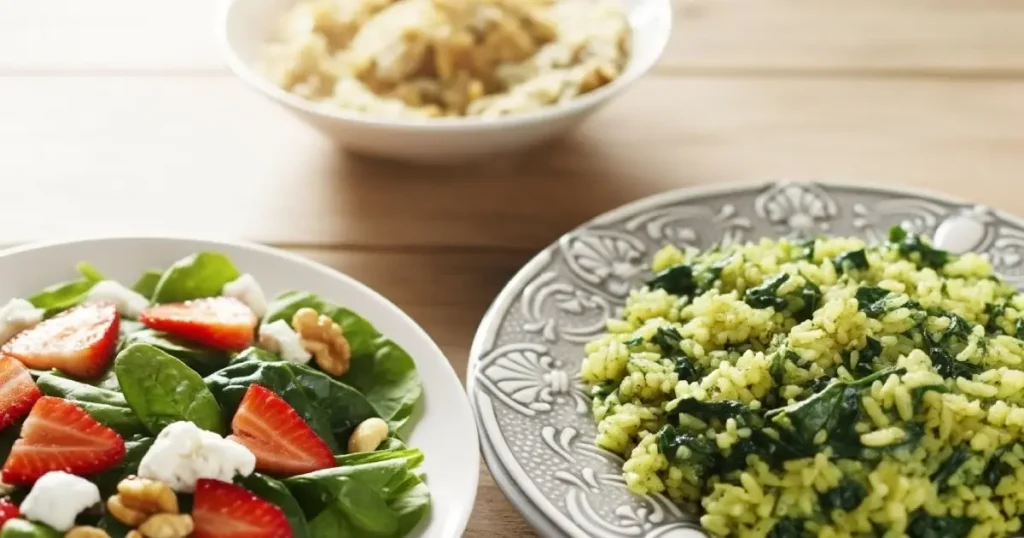
Ensalada de Fresa (Strawberry Salad): A sweeter alternative featuring fresh strawberries, this salad echoes the dried fruit sweetness in the stuffing while adding fresh, bright notes that cut through the richness.
Arroz en Espinaca (Spinach Rice): Green-tinted rice cooked with spinach puree offers color contrast and mild vegetal flavor. This option appeals to those who prefer savory sides throughout.
Arroz Gratinado (Gratinated Rice): Rice baked with cheese until golden and crispy provides textural variety—the crackling cheese top yielding to soft, savory rice beneath.
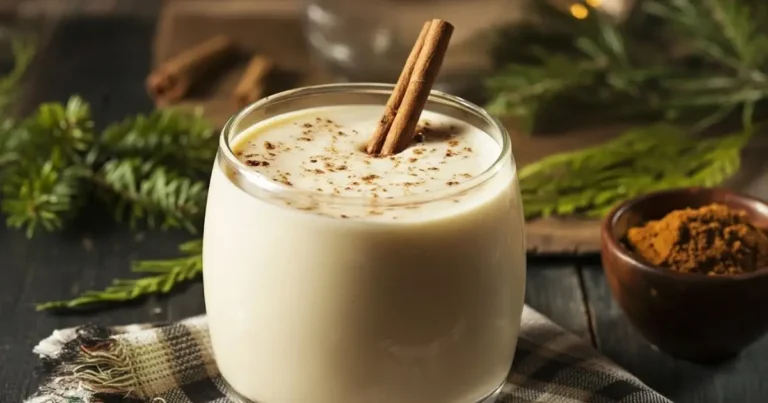
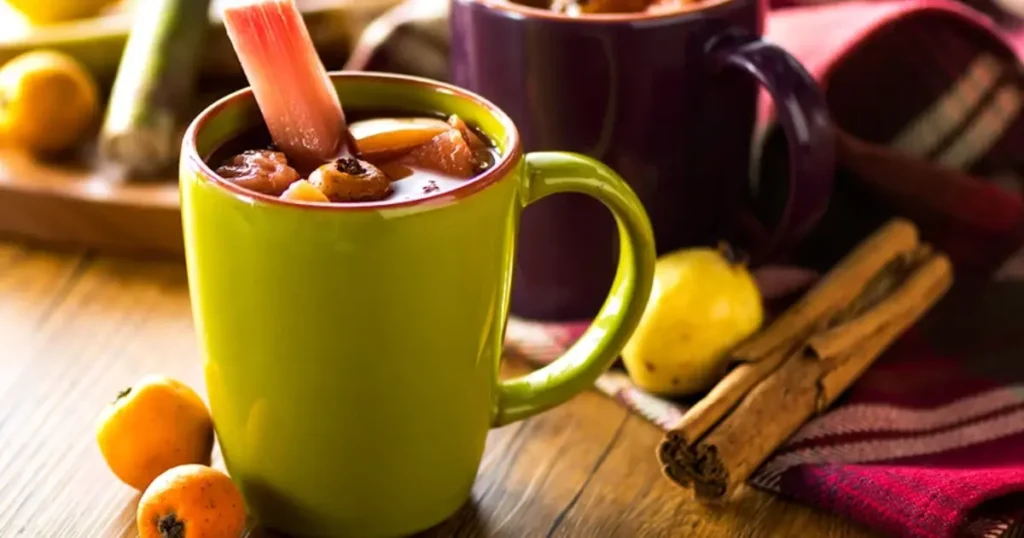
Ponche Tradicional (Traditional Fruit Punch): This warm Christmas punch, made with fresh and dried fruits simmered with sugar and spices, serves as the traditional beverage pairing. Its aromatic warmth and subtle sweetness create perfect harmony with the meal.
Guatemala’s beloved Christmas
Pollo Relleno Guatemalteco represents one of Central America’s most sophisticated and emotionally resonant culinary traditions. This is not merely a chicken recipe—it is edible heritage, a dish that connects contemporary Guatemalan families to centuries of cultural synthesis and adaptation.
What makes this preparation extraordinary lies in its layered complexity: the contrast between crackling, herb-perfumed skin and the hidden surprise of wine-braised meat studded with fruit and nuts. For those seeking to understand Guatemalan cuisine deeply, Pollo Relleno offers an ideal entry point. It showcases the nation’s Spanish colonial inheritance while demonstrating distinctly Central American sensibilities about celebration, family, and the profound importance of food in marking life’s significant moments.