Guatemalan Tamales: History, Recipes & Traditions
The Authentic Guatemalan Tamales
Few dishes carry the weight of centuries quite like the Guatemalan tamal. Long before European ships arrived on Mesoamerican shores, the Maya were already wrapping seasoned corn dough in leaves and steaming it over open fires—a culinary practice so enduring that it remains virtually unchanged in its fundamental technique today. The tamal is not simply food in Guatemala; it is a living artifact, a vessel of cultural memory that connects modern families to ancestors who once offered these wrapped parcels to Yum Kaax, the corn god, in exchange for rain and abundant harvests.
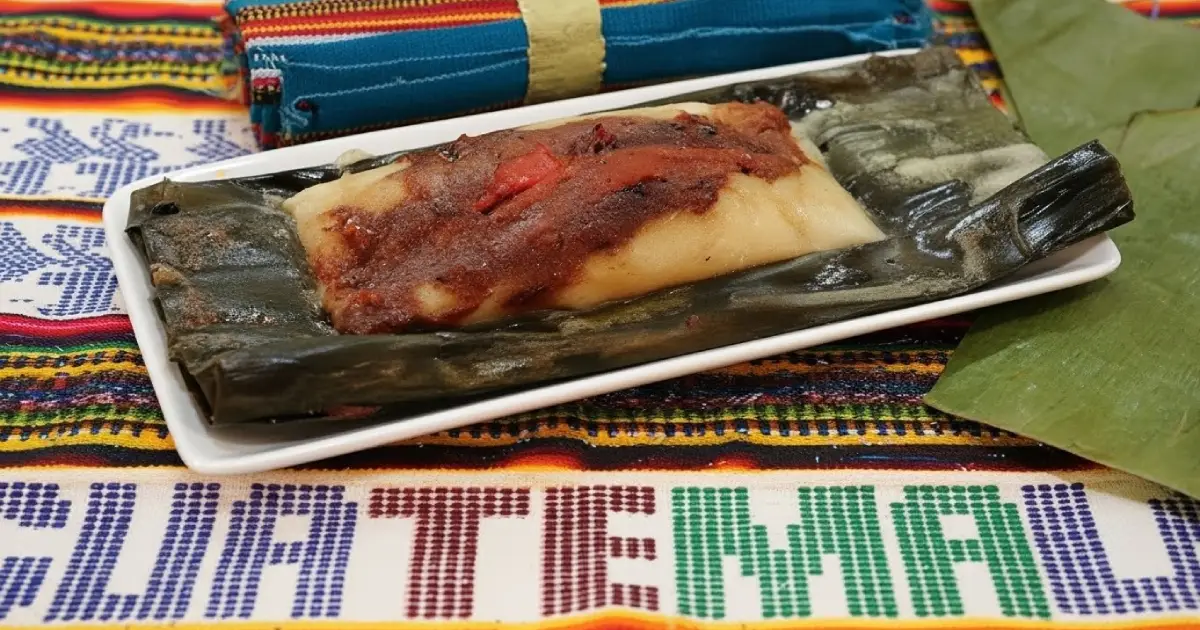
What distinguishes Guatemalan tamales from their Mexican or Salvadoran counterparts is their remarkable diversity and the ceremonial gravity with which they are prepared. From the sweet, chocolate-laced tamales negros served during Christmas to the rice-based tamales de arroz of the western highlands, each variety tells a story of geography, history, and adaptation. Resources like Guatemala Food have documented this rich culinary heritage, preserving recipes and traditions that might otherwise fade from collective memory.Understanding these tamales requires more than following a recipe—it demands appreciation for the layers of history folded into every banana leaf wrapper, the blend of indigenous and Spanish influences that created one of Central America’s most revered dishes.
Historical and Cultural Background
Ancient Maya Origins
The archaeological record places tamales firmly within Maya civilization, with murals discovered at Dos Pilas and San Bartolo in Guatemala’s Petén region depicting their consumption. These images confirm that tamales were not occasional treats but integral components of daily and ceremonial life. For the Maya, corn was sacred—the very substance from which humanity was created according to the Popol Vuh, their foundational text. Tamales, as concentrated expressions of this sacred grain, naturally assumed religious significance.
Etymology and Pre-Hispanic Preparation
The term itself arrived via Náhuatl, the language of the Aztec Empire, where tamalli simply meant “wrapped.” This linguistic borrowing reflects the dish’s prevalence across Mesoamerica, transcending any single culture. Original Maya preparations differed substantially from modern versions. The dough was pure ground corn, seasoned minimally with achiote and salt, sometimes enriched with toasted pumpkin seeds (pepita de ayote). Rather than banana leaves—a post-Conquest introduction—early tamales were wrapped in chaya leaves, a native plant still used in some traditional preparations.
Transformation After the Spanish Conquest
The arrival of Spanish colonizers in the sixteenth century catalyzed dramatic culinary evolution. Pork replaced wild game as the primary protein. Lard (manteca) enriched the masa, creating the tender, almost creamy texture characteristic of modern tamales. European ingredients—olives, capers, almonds, prunes, cinnamon, cloves—entered the repertoire, transforming a relatively simple preparation into the baroque constructions celebrated today.
Main Varieties of Guatemalan Tamales
Guatemala’s tamal tradition encompasses numerous styles—colorados (red), chipilín, cambray, elote (corn)—but two varieties stand as particularly significant: the rice-based tamales de arroz and the sweet holiday tamales negros.
Tamales de Arroz (Rice Tamales)
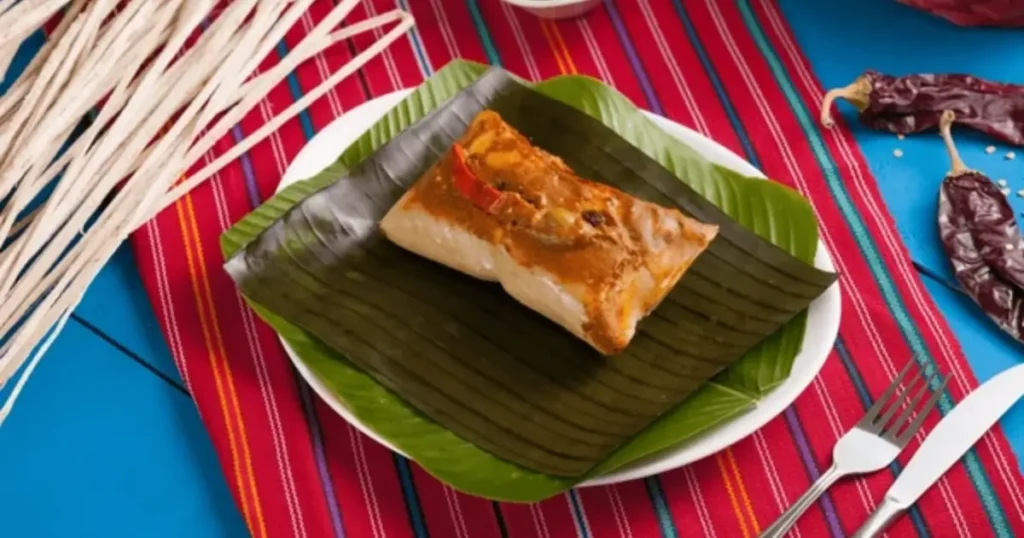
Originating in the altiplano (highlands) of western Guatemala, these tamales diverge fundamentally from corn-based traditions by substituting rice for maize. Departments including Quetzaltenango, Sololá, Totonicapán, Huehuetenango, and San Marcos claim this style as their own, preparing them throughout the year but especially during end-of-year celebrations.
The rice dough achieves a thick, cream-like consistency quite unlike corn masa—smoother, slightly glossy, with a subtle sweetness from the grain itself. Saffron (azafrán) tints the dough golden while contributing its distinctive floral notes. The recado balances tomato acidity with the earthiness of dried chiles (guaque and pasa) and the richness of toasted sesame and pumpkin seeds.
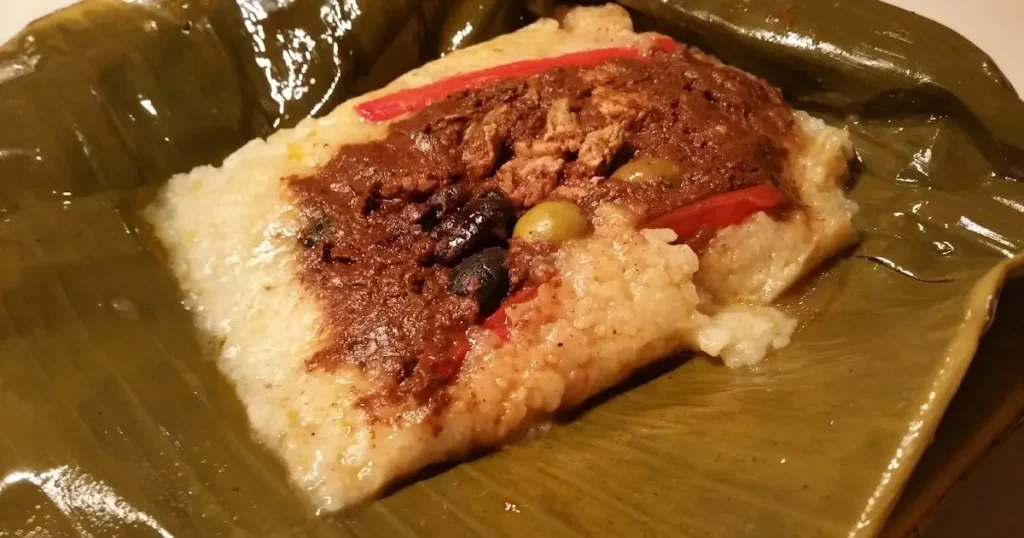
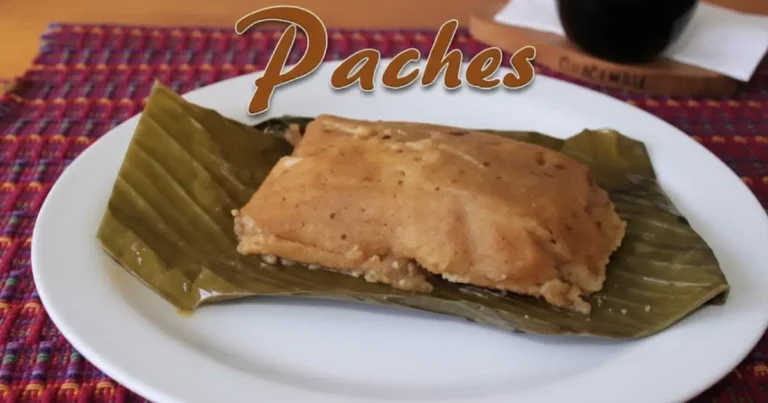
Tamales Negros (Black Tamales)
If tamales de arroz represent highland pragmatism, tamales negros embody festive extravagance. Reserved primarily for Christmas and New Year celebrations, these dark, complex parcels blur the boundary between savory and sweet. The characteristic black sauce—a mole-like recado containing artisanal chocolate, cinnamon, cloves, almonds, and champurradas (sweet cookies) as thickener—creates a flavor profile that surprises those expecting purely savory fare.
The contrast is intentional and culturally meaningful. While everyday tamales satisfy hunger, tamales negros celebrate abundance. Prunes and almonds studding the filling, the sweetened masa, the double-leaf wrapping of banana and maxán—every element signals special occasion, communal effort, family gathered.
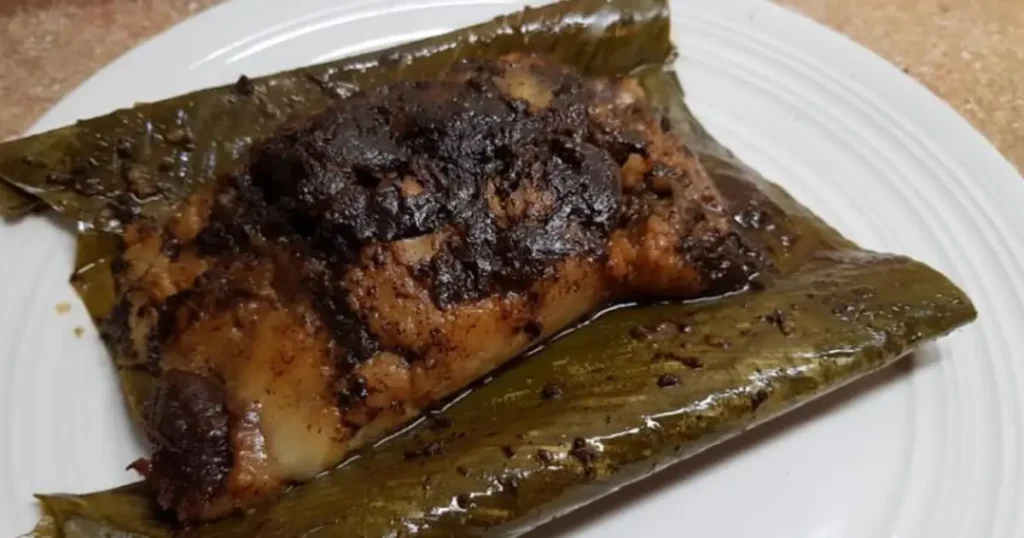
Core Ingredients and Components
For Tamales de Arroz
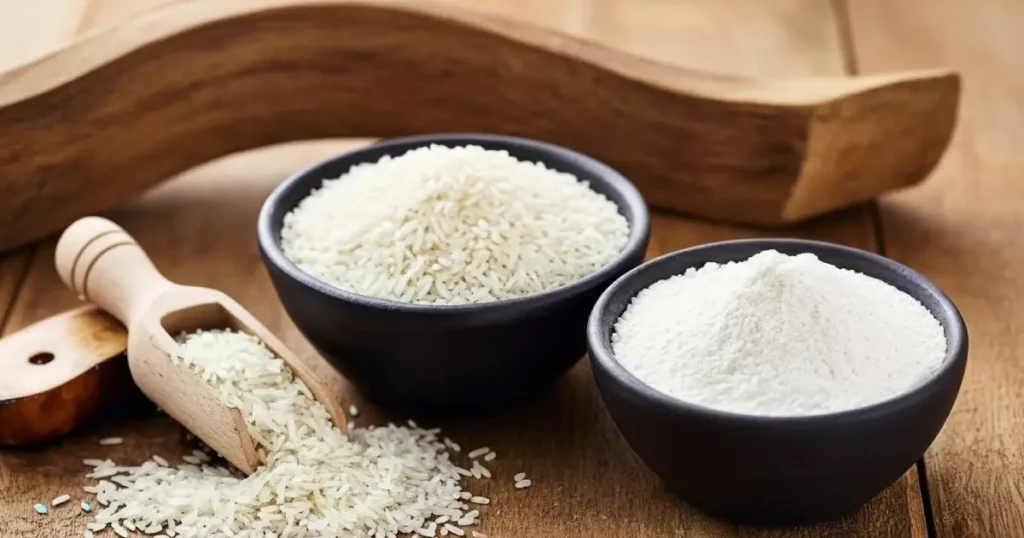
Masa (Rice Dough): Rice forms the foundation—typically three pounds soaked overnight, then cooked with approximately four liters of water until broken down into thick liquid. One pound of lard per three pounds of rice provides richness. Pork cooking broth replaces plain water for deeper flavor. Saffron, dissolved in boiling water before incorporation, delivers color and aroma. Critical technique: oversalt the masa, as steaming diminishes salinity.
Recado (Sauce): Two pounds tomatoes, roasted and ground. Red bell peppers for sweetness. Dried chile pasa and chile guaque for heat and depth. Toasted pepitoria (pumpkin seeds) and ajonjolí (sesame seeds) for body and nutty undertones. One cinnamon stick for warmth.
Filling and Garnish: Pork, cooked separately and cut into portions. Green olives. Strips of red bell pepper.
Wrapping: Banana leaves (hojas de plátano), passed through boiling water for pliability. Cibaque fibers for tying.
For Tamales Negros
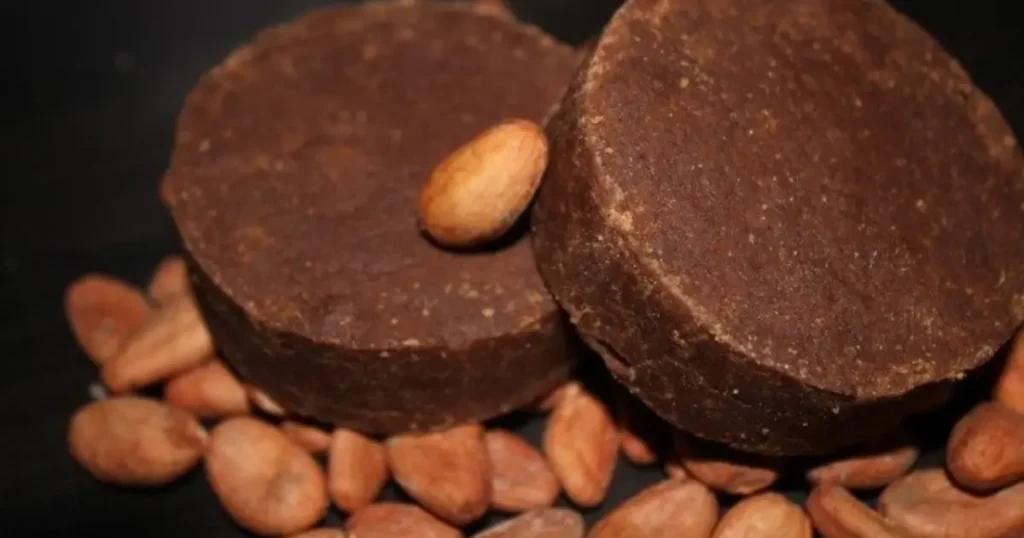
Recado Negro: Roasted tomatoes and dried chiles form the base. Toasted sesame seeds, pumpkin seeds, cinnamon, and cloves build complexity. Champurradas (sweet bread/cookies), crumbled, thicken the sauce. Artisanal chocolate and sugar create the signature sweet-savory profile. Almonds and prunes add texture and fruited depth.
Masa: Corn masa combined with cooked, liquefied broken rice. Sweetened with sugar. Flavored with cinnamon-infused water and cream essence. Enriched with beaten lard.
Filling: Pork or turkey breast. Bacon strips. Whole prunes. Split almonds. Bell pepper strips.
Wrapping: Double layer—banana leaf beneath, maxán leaf above. Tied with cibaque using triple knots for security.
Step-by-Step Preparation
Day One: Foundations
1. Soak and Prepare Base Ingredients For rice tamales, submerge rice in water overnight. For tamales negros, prepare corn masa by mixing with water to achieve smooth consistency. Toast seeds (pumpkin and sesame) separately until fragrant and golden.
2. Prepare the Recado Roast tomatoes and dried chiles over open flame or comal until charred and softened. Grind roasted vegetables with toasted seeds and spices. For tamales negros, incorporate crumbled champurradas, melted chocolate, and sugar. Fry the ground mixture in lard until thick and aromatic—the sauce should not run when a spoon is dragged through it. Allow to cool overnight; this resting period develops flavor and ensures proper consistency.
3. Cook the Protein Simmer pork (or turkey for tamales negros) in salted water until tender. Reserve the cooking broth for the masa. Cut meat into portion-sized pieces.
Day Two: Assembly and Cooking
4. Prepare the Masa For rice tamales: Cook soaked rice until liquefied, then incorporate lard, reserved pork broth, and dissolved saffron. Stir constantly with wooden paddle in heavy-bottomed pot until mixture achieves thick cream consistency. For tamales negros: Blend cooked rice with corn masa, add cinnamon water, sugar, lard, and cream essence. Beat until smooth and thick. Both masas should cool before assembly.
5. Prepare the Leaves Cut banana leaves into rectangles approximately 12 inches square. Pass through boiling water until pliable—they should fold without cracking. Dry thoroughly. For tamales negros, clean maxán leaves and sun-dry.
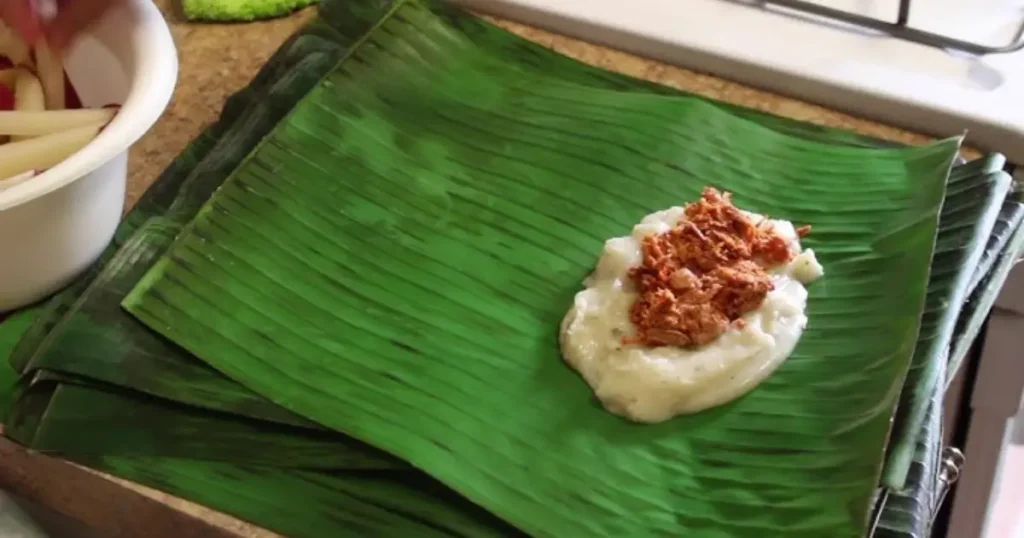
6. Assemble Place prepared leaf (or double layer for negros) on work surface. Spread generous portion of masa in center, leaving borders for folding. Add spoonful of recado. Place meat portion, then garnishes appropriate to variety. Fold sides inward, then fold top and bottom to create secure packet. Tie with cibaque—standard knot for arroz, triple knot for negros.
7. Steam Arrange tamales in large pot (clay or metal) lined with extra leaves. Add water to fill approximately half the pot’s height—tamales should steam above water level, not boil in it. Cover tightly. Steam until water evaporates completely, approximately two hours for tamales negros, slightly less for arroz. Tamales are done when masa pulls cleanly away from leaf.
Tamales de Arroz y Tamales Negros
The Guatemalan tamal represents far more than wrapped dough and filling—it embodies continuous cultural transmission across millennia, from Maya ceremonial offerings through Spanish colonial transformation to contemporary family celebrations. Each variety tells its own story: the highland pragmatism of tamales de arroz, the baroque festivity of tamales negros, the ancestral simplicity of chaya-wrapped Maya originals.
Mastering these preparations requires patience, practice, and respect for tradition. The techniques—nixtamalization, recado construction, proper leaf preparation, precise steaming—developed over centuries to solve specific culinary problems. Understanding why each step matters transforms mechanical recipe-following into genuine craft.