
Plátano en Mole: Guide to Guatemalan Gastronomy, History, Cultural Heritage, and the Sweet Magic
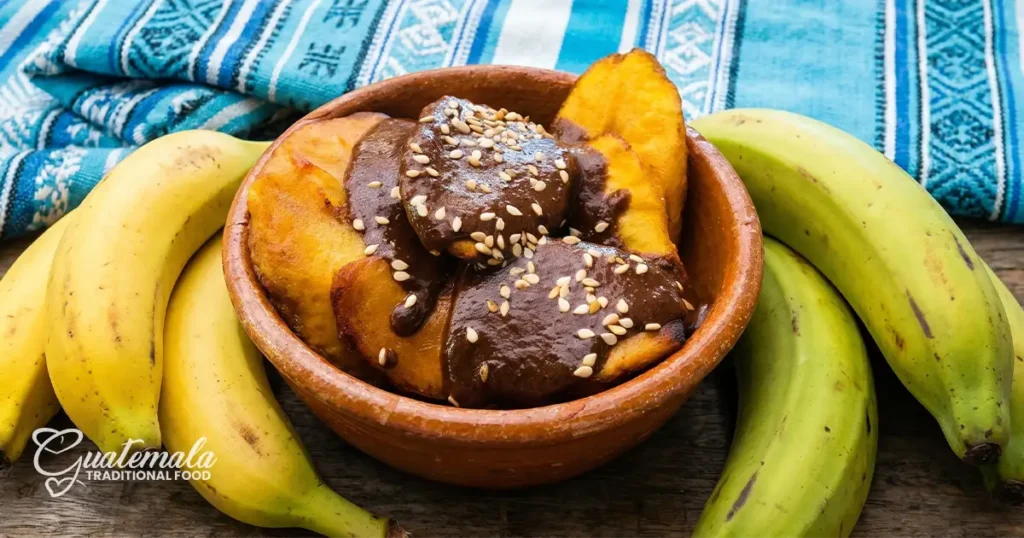
Welcome to Guatemala Food, and today we are going to talk about the profound history of our cuisine and the sweet perfection of the plátano en mole guatemalteco.
Guatemalan gastronomy is the breathtaking result of an exquisite fusion between two great cultures: the indigenous Mayan civilization and the Spanish colonizers. Since the pre-Hispanic era, native ingredients like corn and beans have been the absolute foundation of our diet, beautifully combined with local chilies, squash, and cacao. Over centuries, these native elements blended with European spices to create a culinary identity unlike any other in the world.
- Dishes Declared Intangible Cultural Heritage of the Nation
- Plátanos en Mole: The Quintessential Guatemalan Dessert
- Cacao and Chocolate: The Drink of the Gods in Chapín Culture
- Ancestral Techniques and Utensils of the Guatemalan Kitchen
- Traditional Recipe: How to Prepare Plátanos en Mole
- Frequently Asked Questions (FAQ)
Dishes Declared Intangible Cultural Heritage of the Nation
To truly understand the depth of our food, we have to look at its institutional and historical value. Because of its incredible cultural significance, the Government of Guatemala proudly declared four traditional dishes as Intangible Cultural Heritage of the Nation on November 7, 2007.
The 4 Gastronomic Pillars: Jocón, Pepián, Kaq 'ik, and Plátanos en Mole
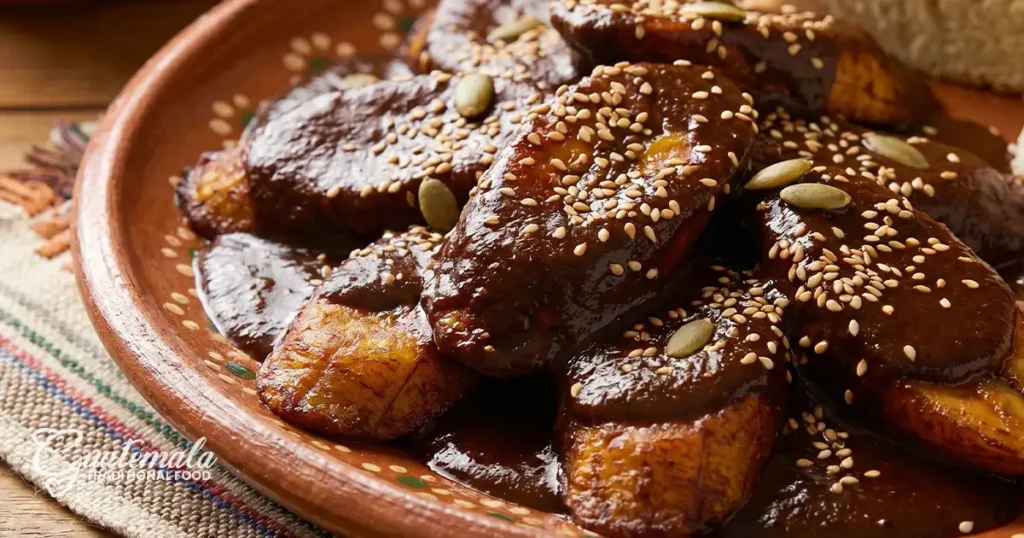
These four culinary creations perfectly showcase the fusion of pre-colonial cooking with Hispano-Arabic ingredients. While Jocón, Pepián, and Kaq 'ik are hearty, savory main courses designed to nourish the body, the plátano en mole stands out as the sole sweet preparation on this prestigious list, designed to delight the soul.
Plátanos en Mole: The Quintessential Guatemalan Dessert
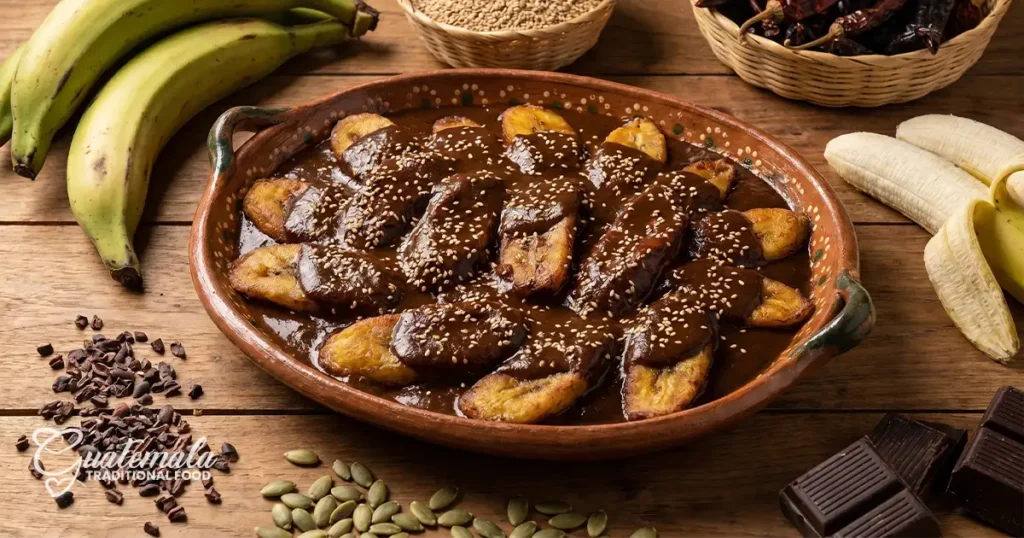
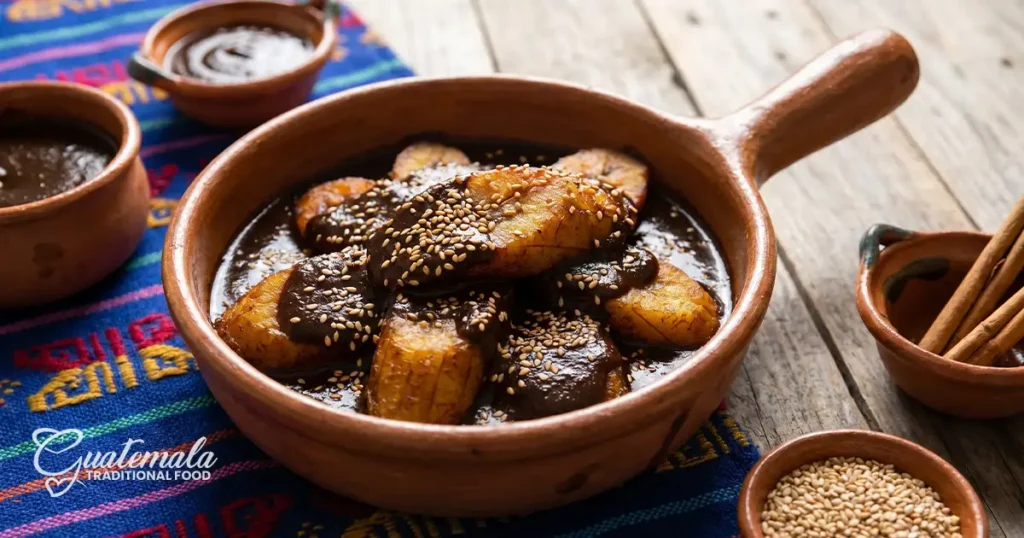
When we talk about traditional sweets, nothing compares to the decadent, velvety experience of platanos en mole de guatemala.
Historia del plátano en mole guatemalteco
The history of this exquisite dessert is a fascinating tale of cultural blending. It first emerged in the mid-16th century in the department of San Marcos. Its creation coincided with the formation of the cofradías (religious brotherhoods), where community gatherings required special, celebratory foods that could feed a crowd while showcasing the finest local ingredients.
What is the Difference Between Guatemalan and Mexican Mole?
This is one of the most common questions from food enthusiasts! The primary difference lies in the flavor profile and usage. While Mexican mole is typically a savory, complex sauce served over white meats like chicken or turkey, the Guatemalan version is definitively sweet. Putting platano en el mole means you are preparing a rich, chocolate-based dessert sauce meant to bathe sweet, fried plantains.
Plátanos en Mole Ingredientes
The secret to this dish is its perfectly balanced sauce. Traditional plátanos en mole ingredientes include:
- The Thickeners: Sweet bread (pan dulce) or artisanal champurradas (a type of Guatemalan cookie).
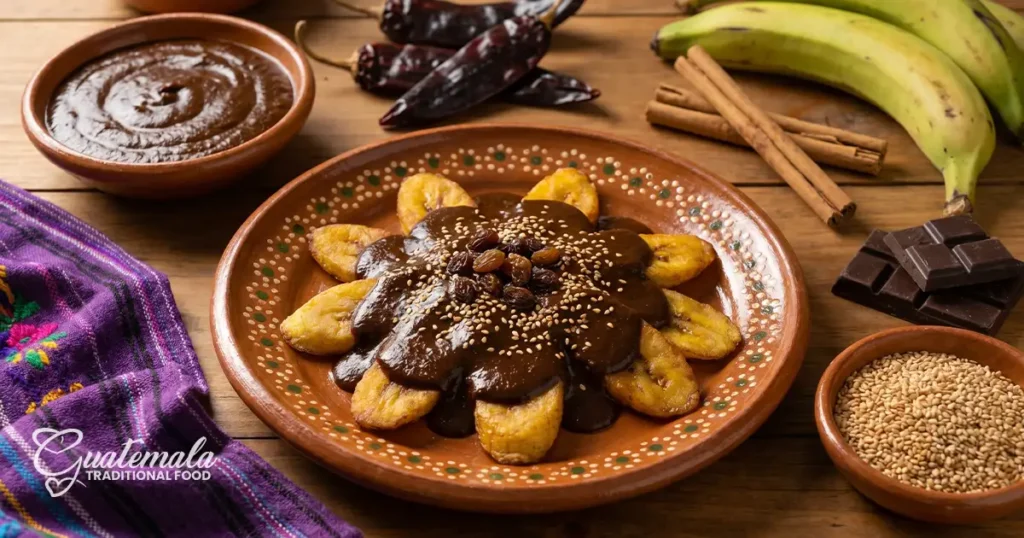
- The Spices & Seeds: Chile pasa (similar to pasilla), chile guaque, tomatoes, roasted pepitoria (pumpkin seeds), ajonjolí (sesame seeds), and cinnamon.
- The Star Ingredient: Authentic, artisanal Guatemalan chocolate.
Cacao and Chocolate: The Drink of the Gods in Chapín Culture
You cannot fully appreciate a good receta de platano en mole without understanding the star of the dish: chocolate.
Mayan Origin and Transformation
In the ancient Mayan world, cacao was not just food; it was a symbol of immense wealth, fertility, and the afterlife. In its earliest form, it was consumed as a frothy, spicy beverage often mixed with the fiery chile cobanero. Following the Spanish arrival, the drink was transformed with the addition of milk, sugar, anise, and cinnamon, creating the sweeter flavor profile we recognize today.
The Famous Chocolate of Mixco
The tradition of artisanal chocolate making is fiercely protected in Guatemala. In fact, the elaboration of chocolate in the municipality of Mixco was declared an Intangible Heritage of the Nation on September 7, 2009. The local artisans preserve the ancestral process of hand-grinding roasted cacao seeds with cinnamon and sugar to form the iconic rustic chocolate tablets used in our recipes.
Ancestral Techniques and Utensils of the Guatemalan Kitchen
The techniques used to create these historic dishes are just as important as the ingredients themselves.
Nixtamalization and Natural Thickeners
A pillar of our cooking is nixtamalización—the ancient process of cooking dried corn kernels with water and cal (food-grade lime). This is fundamental for creating the masa used in tamales, atoles, and tortillas. Just as corn masa is used to thicken savory recados, toasted seeds and baked goods are used as natural thickeners to give our sweet mole its luxurious texture.
Historical Utensils
Step into a traditional Guatemalan kitchen, and you will see pre-Hispanic equipment still in daily use. We use the comal de barro (clay griddle) to perfectly toast our spices and bake tortillas, deep clay pots called apastes, and the indispensable piedra de moler (grinding stone), which is the most authentic tool for pulverizing the chilies, seeds, and chocolate for the mole.
Traditional Recipe: How to Prepare Plátanos en Mole
If you are ready to bring this heritage into your home, here is the authentic receta platano en mole guatemalteco.
Step 1: Fry the Plantains Slice ripe, sweet plantains diagonally into thick pieces (lajas). Fry them in a skillet with oil until they are beautifully golden brown on both sides. Remove from the oil and set them aside.
Step 2: Roast the Spices On a comal or a dry skillet, individually toast the pepitoria, ajonjolí, and cinnamon stick until fragrant. Next, carefully roast the tomatoes, chile pasa, and chile guaque. Crucial tip: Do not let the chilies burn, or your mole will taste bitter!
Step 3: Blend the Recado Soak your champurradas or sweet bread in a little warm water. In a blender (or on a traditional grinding stone, if you have one), process the roasted chilies, tomatoes, toasted spices, and the hydrated bread until you form a perfectly smooth, homogeneous recado.
Step 4: Melt the Chocolate In a large pot, dilute your Guatemalan chocolate tablets in boiling water. Once melted, pour in the blended recado mixture and add sugar to your liking. Bring the sauce to a gentle simmer over low heat.
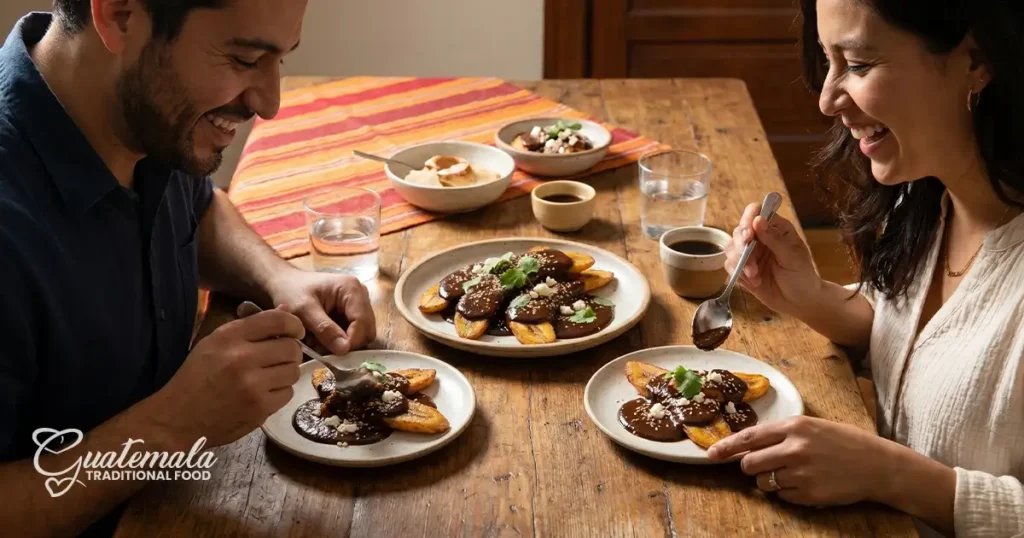
Step 5: Combine and Serve Gently fold your fried plantains into the boiling chocolate mole sauce. Let everything simmer together for 5 to 10 minutes so the plantains absorb the incredible flavors. Serve warm, generously decorated with toasted ajonjolí sprinkled on top.
Frequently Asked Questions (FAQ)
What exactly is platano en mole? It is a traditional, historic Guatemalan dessert consisting of slices of sweet, fried plantains that are simmered in a rich, thick sauce made from artisanal chocolate, roasted seeds, and mild dried chilies.
Are the chilies in the dessert spicy? Not at all. The chile pasa and chile guaque used in this recipe are mild. Their purpose is to provide a deep, slightly smoky, and earthy flavor that balances the sweetness of the chocolate and the plantains, rather than to add heat.
What kind of chocolate should I use? For an authentic flavor, you must use traditional Guatemalan drinking chocolate tablets (often flavored with cinnamon and sugar). If you cannot find them, Mexican chocolate tablets (like Ibarra or Abuelita) are the closest accessible substitute in the US.
The cuisine of Guatemala is a living, breathing treasure that connects us directly to our ancestors. Preparing this dish is a wonderful way to honor that history and bring a taste of genuine chapín sweetness into your kitchen. Enjoy the process, savor the aromas, and welcome to the beautiful world of Guatemalan food.
If you want to see other articles similar to Plátano en Mole: Guide to Guatemalan Gastronomy, History, Cultural Heritage, and the Sweet Magic you can visit the category Dessert.